AI TOOL / #10287
Conversational Replicas by Tavus
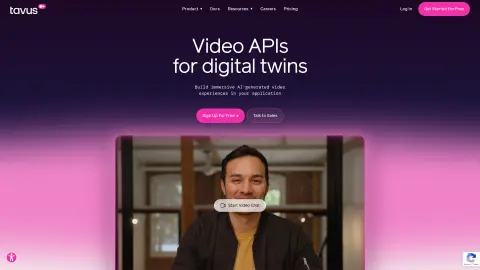
Tavus: AI video research for building human-like AI interactions and digital twins.
Introduction
Tavus: AI video research for building human-like AI interactions and digital twins.
What is Tavus?
Tavus is an AI video research company that provides an operating system for human-computer interaction, helping product development teams build brand-customized digital twin experiences with an easy-to-use API. It offers tools that enable AI agents to see, hear, respond, and behave like humans in real time, focusing on conversational video interfaces, video generation, and lip-sync technology.
How do I use Tavus?
Developers can use Tavus's API to build AI-powered video conversations, generate videos, and create realistic lip sync. You can sign up for free to get started and access documentation for integrating the API into your own product.
Core features of Tavus
Conversational Video Interface (CVI)
Video generation
Lip-sync model
Facial rendering, vision, speech, and affective intelligence models
Brand Customization API
If you're using it to make AI short dramas, start by looking for scripts and storyboards on TVLab: it has plot breakdowns of hit overseas short dramas, beat sheets for short-drama tropes, and inspiration cards with storyboards already broken down—just copy them over and use them as prompts.
Related
KUMOKIRI: The Ink Warrior
A gaming experience with a painting-style aesthetic: Fable 5.2 combined with Crayon and three.js
Farewell Light
A gameplay demonstration created throughout the entire night
"Vast Horizon": Text-based Surfing
Many people surf on the same lake; entering just one word can change the entire world.
IGNITION: Zero Edge – A fighting game
A 2D fighting game that features generated voice effects and sound clips, and allows users to save their battle records and watch replays.
Vippi-style COD shooting game
The Bay Area: A 250-Year History
Zoom in on any city or neighborhood, and select any year since 1769 to see what it looked like back then.